


What People Are Really Looking for When They Start Jiu Jitsu in Fredericksburg, VA


When adults decide to start jiu jitsu, they usually have a practical reason ready.
They want to get in better shape.
They want to learn self-defense.
They need a new hobby.
They are looking for a more interesting way to exercise.
Those answers are real, but they are rarely the whole answer.
Underneath them, many people are looking for something harder to describe. They want a place where they can step away from the demands of work and daily life. They want to feel capable again. They want to meet people without forcing themselves into another awkward networking environment. They want a challenge that requires their full attention and gives them something meaningful in return.
In other words, many people who start jiu jitsu are not simply looking for a workout. They are looking for a reset, a sense of community, and confidence they can actually feel.
The right challenge does more than test you. It shows you what you are capable of becoming.
The Reason Someone Starts Is Not Always the Reason They Stay
Exercise may be what first leads someone to search for adult jiu jitsu classes in Fredericksburg, VA. It is concrete, easy to explain, and socially acceptable. It also does not fully capture what happens when someone finds the right training environment.
A good jiu jitsu class gives people a chance to work on a difficult problem without carrying the rest of the day into it. They have to pay attention to movement, pressure, timing, balance, space, and another person’s reactions. There is very little room to think about unanswered emails, unfinished projects, or what happened earlier in the day. That level of focus can feel unfamiliar at first, but it can also feel like relief.
The physical activity matters, but so does the experience of being completely engaged in something happening right now. For many adults, that is one of the first things they notice about training. Jiu jitsu gives their attention somewhere immediate and productive to go. They may arrive looking for fitness, but they often stay because training gives them something their usual routine does not.
Jiu Jitsu Creates a Different Kind of Reset
Rest doesn't always mean doing nothing. Sometimes the best reset comes from doing something that demands enough attention to interrupt the mental noise.
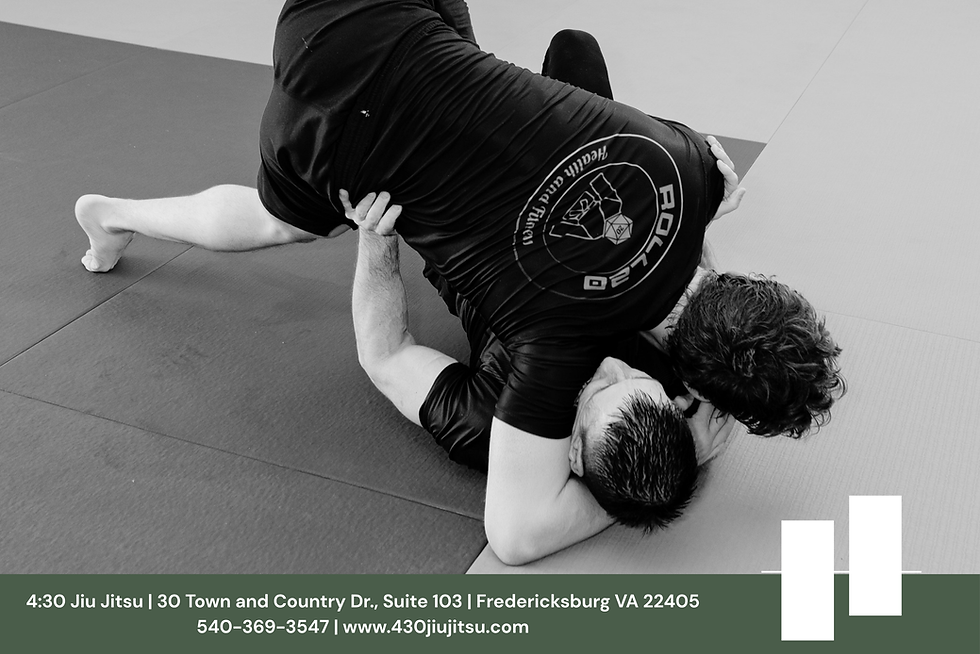
Jiu jitsu requires active problem-solving. Your training partner moves, resists, changes direction, and creates new situations. You cannot follow a memorized sequence and mentally check out. You have to notice what is happening and make a decision based on the information available in that moment.
This makes training physically challenging, but it also makes it mentally absorbing.
For someone who spends most of the day answering questions, solving problems, sitting behind a desk, managing other people, or moving between competing responsibilities, jiu jitsu offers a very different experience. The challenge is still there, but it is tangible. You can feel where the pressure is coming from, test a response, and adjust when it does not work.
There is no expectation that every problem will be solved immediately. You work with the situation in front of you, learn from what happens, and try again with more information. That's one reason adults often leave class physically tired but mentally lighter. The circumstances of their day have not disappeared, but they have spent an hour fully engaged in something outside of them.
Jiu jitsu isn't therapy, and it should not be presented as a replacement for professional mental health care. It can, however, provide a structured physical and social environment where people can step away from their usual patterns and focus on a manageable challenge. Sometimes that is exactly the reset they were looking for.
Confidence is not always knowing what to do. Sometimes it is trusting yourself to respond when you don't.
Community Without Forced Connection
Adults can be surrounded by people every day and still struggle to find genuine community. Work relationships often remain tied to roles and responsibilities, while social events can feel performative or place pressure on people to create an immediate connection through small talk.
Jiu jitsu creates connection differently.
People train together before they know much about one another. They share difficult rounds, awkward mistakes, small improvements, and the vulnerability of learning something unfamiliar. Trust begins to develop through action rather than through introductions or carefully managed conversation.
Training partners learn how to give one another enough resistance to create a meaningful challenge without treating every exchange like a competition that must be won. They learn how different people move, where they are strong, where they are cautious, and how to adjust so both people can continue learning.
That shared work creates a sense of belonging without demanding instant friendship. You do not have to be outgoing, arrive with someone else, or already understand martial arts culture. You need to be willing to participate, pay attention, communicate, and treat the people around you with respect.
Over time, familiar faces begin to matter. Training partners notice when you improve, remember what has given you trouble, and become part of the reason you are willing to keep trying when something feels difficult.
That kind of community cannot be manufactured through slogans. It is built through repeated experiences of helping one another learn.
The right training room challenges you without making you feel disposable.
The Confidence People Want Is Usually Not Loud
When people say they want to become more confident, they are not always talking about becoming more aggressive, dominant, or outspoken. More often, they want to trust themselves. They want to know they can remain present when something feels uncomfortable, make decisions without freezing, and move through mistakes without immediately deciding they are incapable.
Jiu jitsu can help develop that kind of confidence because improvement has to be experienced, not simply claimed. A technique may make complete sense during an explanation and then fall apart as soon as a training partner begins moving. A position that felt manageable one week may present an entirely different problem with someone else. What worked before may need to be adjusted, refined, or abandoned altogether.
That unpredictability is not a flaw in the learning process. It is what makes the learning meaningful.
Over time, students begin to understand that they do not need to know exactly what will happen next in order to respond well. They can pay attention to what is happening, make a decision, notice the result, and adjust from there. Confidence grows through those experiences because students are not relying on reassurance alone. They are building evidence that they can stay engaged even when they are tired, confused, uncomfortable, or placed in an unfamiliar position.
They also begin to see mistakes differently. A failed attempt is no longer proof that they cannot do something. It becomes information about timing, positioning, pressure, or the decision they made in that moment. Being new does not mean being incapable, and struggling with a problem does not mean they are failing to learn.
That is a quieter form of confidence. It is built through repeated experiences of facing uncertainty, adapting to what happens, and discovering that they are more capable than they originally believed. It may begin in the training room, but it often follows people well beyond it.
Why the Way You Train Matters
People may begin looking for jiu jitsu because they want community, confidence, a physical challenge, or a reset from daily life. Whether they actually find those things depends heavily on how the training environment is structured.
At 4:30 Jiu Jitsu, we use an ecological approach to training. Students learn through live, problem-based situations where they must pay attention to movement, pressure, timing, space, and the reactions of a training partner.
Rather than treating jiu jitsu as a collection of movements to memorize and reproduce exactly, ecological training helps students develop the ability to recognize what is happening and make useful decisions within the situation.
That approach supports many of the deeper reasons people begin training in the first place. Confidence grows because students learn they can adapt when the situation changes. Focus develops because live problems require their attention. Community is strengthened because training partners must work together to create productive challenges. Development becomes personal because every student is learning to solve problems through their own movement, abilities, and understanding.
This doesn't mean techniques, instruction, or repetition have no place in training. It means those elements are connected to realistic situations so students can understand when, why, and how a particular response may work. It also means there is not always one rigid answer that every person must perform in exactly the same way.
Different students may solve the same problem differently based on their body, experience, movement, and the reactions they receive. The coach helps shape the environment, adjust the challenge, and direct attention toward useful information without removing the student’s opportunity to explore and make decisions.
For beginners, this creates an introduction to jiu jitsu that is active and relevant from the beginning. For experienced grapplers, it creates opportunities to sharpen timing, decision-making, adaptability, and the ability to solve increasingly complex problems.
Ecological training is not simply part of how classes are organized at 4:30 Jiu Jitsu. It reflects our larger philosophy: people develop confidence and skill by learning how to respond, adjust, and continue working when the answer is not immediately obvious.
People may come for the workout. They stay for what the work begins to change.
People Are Looking for a Challenge That Feels Worthwhile
Many adults are not avoiding hard things. They are already dealing with plenty of them. The problem is that much of the difficulty in daily life can feel repetitive, scattered, or disconnected from meaningful development. Meetings, errands, notifications, deadlines, and responsibilities consume enormous amounts of energy, but they do not always create the satisfaction that comes from learning a skill and becoming more capable through experience.
Jiu jitsu is difficult in a different way. The challenge is immediate, but it is also useful. Every training session gives students opportunities to improve their awareness, movement, decision-making, and ability to adapt. Even a difficult round can provide information that becomes valuable when a similar situation appears again.
The goal isn't to make training easy. The goal is to create a challenging environment where people can improve safely and at an appropriate level.
A student should never be treated like an obstacle for someone else to overpower. Training partners should provide enough resistance to make the problem real without creating unnecessary danger. Students should also have room to ask questions, slow something down, and better understand what a situation is asking them to do.
This remains important at every level of experience. Beginners need challenges they can engage with productively, while experienced students need resistance and complexity that continue to test their timing, awareness, and decision-making.
Difficulty becomes productive when it is supported by thoughtful coaching and responsible training partners. Without that support, challenge can become discouraging or unsafe. With it, challenge becomes one of the reasons people feel proud of returning.
The Training Environment Matters as Much as the Activity
Not every jiu jitsu room creates the same experience.
The quality of coaching, class size, training culture, and approach to safety all affect whether a student feels supported, challenged, and able to continue developing.
At 4:30 Jiu Jitsu, adult class registration is capped at 16 students. The smaller class format gives the coach more opportunities to observe what is happening, answer questions, adjust the level of resistance, and help students work through problems at an appropriate pace.
That access benefits students at every level. Someone attending a first class may be learning how to move on the ground, work safely with a partner, recognize pressure, and respond when they do not immediately know what to do. An experienced grappler may need help identifying a pattern, refining a decision, or working through a problem that has become difficult to solve. Both benefit from coaching that is attentive enough to see what is actually happening.
Safety does not mean removing every difficult or uncomfortable moment from training. Jiu jitsu is a physical martial art, and challenge is part of the experience. Safety means the room is structured so students can explore those challenges without being slammed, intentionally hurt, or treated carelessly. It means questions and concerns are taken seriously, and the level of resistance can be modified based on the individual and the situation.
You Do Not Need to Become Someone Else to Belong in Jiu Jitsu
Many people hesitate to try jiu jitsu, or to walk into a new academy, because they have a specific image of who belongs in a martial arts class.
They picture someone younger, more athletic, more coordinated, more confident, or already comfortable with physical contact. Someone with previous experience may worry about entering a room with an unfamiliar coaching style or training culture. Someone returning after time away may assume they need to recover their previous fitness or skill level before they can begin again.
Those assumptions keep capable people from finding a training environment that may suit them well.
There is no single personality type, body type, or athletic background required to learn jiu jitsu. Students bring different strengths into the room. Some understand movement quickly. Some are patient problem-solvers. Some have strong balance. Others pay close attention to detail, remain calm in difficult positions, or recognize patterns that someone else may miss.
They also bring limitations, uncertainties, previous experiences, and concerns. That is normal.
You are not expected to arrive with every answer, move like someone else, or prove that you deserve a place in the room. Whether you are completely new, returning to training, or looking for a different academy, the right jiu jitsu environment should meet you where you are while still giving you meaningful opportunities to develop.
What People Find When the Room Is Right
Most people will never describe their first search for jiu jitsu as a search for belonging, earned confidence, and relief from mental overload. They will say they want to exercise, learn self-defense, try martial arts, return to training, or find a new academy. But when the training environment is right, they often find much more than the reason they originally gave.
They find a place where their attention is fully occupied and the rest of the day temporarily becomes quieter. They find people who are willing to challenge them without treating them carelessly. They find a difficult skill that rewards patience, awareness, and adaptability.
They also find evidence that they can struggle without quitting, make mistakes without deciding they are incapable, and feel uncomfortable without losing control. Over time, training becomes more than an activity scheduled twice a week. It becomes a place where they can learn, contribute, and continue discovering what they are capable of doing.
That is what many people are really looking for when they start jiu jitsu or begin searching for a different place to train. They simply may not know how to name it yet.
Questions to Ask When Choosing the Right Jiu Jitsu Training Environment
What should I look for when choosing a jiu jitsu gym?
Look beyond the schedule, location, and price. Pay attention to how students interact, how the coach handles questions, whether training intensity can be adjusted, and whether people are being challenged without being treated carelessly. A good training environment should support beginners while continuing to challenge experienced students. Safety, productive resistance, communication, and long-term skill development should be visible in the culture of the room rather than treated as marketing claims.
How do I know whether a jiu jitsu gym is the right fit for me?
The right gym should make you feel challenged without making you feel disposable. You should have access to coaching, feel comfortable raising questions or concerns, and understand that your training partners are there to help you improve rather than use you to prove something. The right fit is not necessarily the easiest room. It is the room where the difficulty feels purposeful, the expectations are understandable, and you can see yourself continuing to learn.
Is 4:30 Jiu Jitsu only for complete beginners?
No. 4:30 Jiu Jitsu welcomes adults with different levels of jiu jitsu and grappling experience. Beginners receive an introduction to live, problem-based learning in a smaller class environment. Experienced students can continue developing their timing, decision-making, adaptability, and ability to solve problems against different reactions and styles. The class is designed to meet students at their current level while still giving them meaningful challenges.
Can I join 4:30 Jiu Jitsu if I have trained at another academy?
Yes. Students with previous jiu jitsu or grappling experience are welcome. Someone may look for a new academy because they have moved, their schedule has changed, they prefer smaller classes, or they want a different approach to coaching and skill development. Previous experience does not need to match the exact training style used at 4:30 Jiu Jitsu. Students should arrive willing to explore the ecological approach, work productively with different training partners, and contribute to a respectful learning environment.
What is ecological jiu jitsu training?
Ecological jiu jitsu develops skill through live, problem-based situations. Students learn to recognize information from a training partner’s movement, pressure, balance, positioning, and reactions. They then make decisions and adjust their responses as the situation changes. The coach shapes the learning environment by changing factors such as the starting position, objective, available options, boundaries, or level of resistance. This allows students to work on specific problems while still experiencing realistic movement and decision-making.
Is ecological training useful for experienced students?
Yes. Experienced students may understand many techniques but still benefit from improving when, why, and how they apply them against live resistance. Ecological training can help experienced grapplers refine their timing, identify opportunities earlier, adapt when an expected response does not occur, and develop more flexible solutions to familiar problems. It is not limited to introducing new students to jiu jitsu. It is an approach to developing skill at every level.
Do I need to be in shape before starting jiu jitsu?
No. You do not need to reach a particular fitness level before beginning. Jiu jitsu will challenge your coordination, movement, strength, endurance, and ability to remain engaged while tired. Those qualities develop through training. Students can work at different levels, take breaks when necessary, and gradually build their physical capacity.
Can jiu jitsu provide a mental reset after work?
Many adults find that jiu jitsu gives them a meaningful break from the demands of work and daily life. Training requires attention to immediate physical problems. You must notice movement, manage pressure, make decisions, and respond to another person. That level of engagement can interrupt the mental noise that follows many people throughout the day. Jiu jitsu is not therapy or a replacement for professional mental health care, but it can provide a structured physical and social environment where people step away from their usual responsibilities and focus completely on the present challenge.
How does a smaller jiu jitsu class affect the training experience?
Smaller classes give the coach more opportunities to observe students, answer questions, adjust resistance, and help people work at an appropriate level. At 4:30 Jiu Jitsu, registration is capped at 16 students. This helps preserve access to coaching while creating a room where beginners, experienced students, and people returning to training can receive meaningful attention. Smaller classes also make it easier to protect the culture of the room and ensure training remains challenging, respectful, and productive.
Is 4:30 Jiu Jitsu a gi or no-gi academy?
4:30 Jiu Jitsu offers adult no-gi jiu jitsu classes in Fredericksburg, Virginia. Students train in fitted athletic clothing such as a rash guard or athletic shirt with shorts or leggings. Clothing should not have zippers, exposed pockets, or hard accessories that could injure a training partner.
When are adult jiu jitsu classes offered in Fredericksburg, VA?
Adult no-gi jiu jitsu classes are held on Mondays and Thursdays at 4:30 p.m. Advance registration is required because class size is limited to 16 students. Your first class at 4:30 Jiu Jitsu is free. Trying a class allows you to experience the coaching approach, ecological training format, class size, and overall culture firsthand. Registration is required, but previous jiu jitsu experience and advanced fitness are not.
At 4:30 Jiu Jitsu in Fredericksburg, VA, the focus is not just on movement, but on how decisions are made under pressure. Training is structured to remove distractions and reduce unnecessary noise so attention stays on what is actually happening in the moment.
Classes are designed with intention, emphasizing focused instruction, active coaching, and measured progress. The environment reinforces awareness, patience, and clarity, where development comes through consistent, deliberate practice rather than repetition without purpose. That approach extends beyond the mat, shaping how challenges are approached both in training and in everyday life.


Comments