


Why Smaller Classes Create Better Jiu Jitsu Training


When most people start looking for a jiu jitsu school, they tend to focus on schedules, pricing, location, or belt rankings. Those things matter, but they often overlook one factor that has a significant impact on how quickly and effectively they learn:
The training environment itself.
At 4:30 Jiu Jitsu in Fredericksburg, VA, registration is intentionally capped. Not because we are trying to create exclusivity, but because the quality of the learning experience changes when instructors can actively coach, observe, and guide every student in the room.
A crowded room may look impressive from the outside. A room designed for learning produces better results on the mat.
A crowded room may look impressive. A room designed for learning produces better results.
More Coaching, Less Waiting
One of the biggest challenges in large classes is limited instructor attention. When dozens of students are training at the same time, it becomes difficult for coaches to observe individual decisions, identify patterns, and provide meaningful feedback. Students often spend significant portions of class waiting for instruction, trying to remember details, or wondering whether they are doing something correctly.
In a more focused training environment, coaching becomes an active part of every session rather than something students receive occasionally.
That means:
More opportunities for direct feedback
More individual attention from instructors
Faster identification of strengths and weaknesses
Better understanding of what is happening during live training
The result is a learning experience that feels more connected, intentional, and productive.
The goal is not to fit more people into a class. The goal is to create more opportunities for learning.
Better Learning Happens Through Interaction
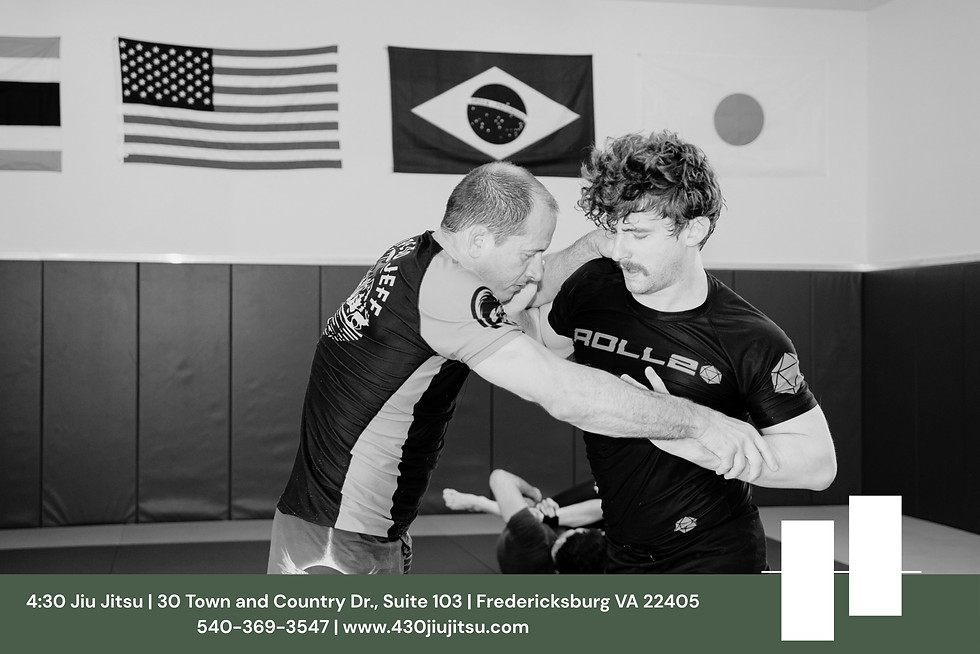
At 4:30 Jiu Jitsu, training follows an ecological approach to learning. Rather than spending large portions of class memorizing techniques in isolation, students develop skill by interacting with live resistance, changing situations, and realistic problems. This style of learning requires observation and guidance.
Coaches are not simply demonstrating a movement and moving on. They are helping students recognize opportunities, solve problems, adapt to different reactions, and improve decision-making under pressure.
That process becomes much more effective when coaches can actually see what students are experiencing in real time. Smaller class sizes make that possible.
Students develop faster when coaches can observe, guide, and respond in real time.
Every Student Becomes Part of the Learning Environment
Training partners play a significant role in development. When classes are intentionally managed, students become familiar with one another's movement patterns, tendencies, strengths, and challenges. This creates a more productive training environment because everyone contributes to the learning process.
Students are exposed to different body types, different skill levels, and different approaches to problem-solving while still benefiting from a consistent training culture.
The goal is not simply to have more people in the room. The goal is to create better interactions between the people who are there.
Progress is not measured by how much activity happens during class. It is measured by how much learning takes place.
Learning Is Easier When You Are Not Lost in the Crowd
Many adults delay trying jiu jitsu because they worry about keeping up. They assume everyone else knows more than they do. They worry about making mistakes. They wonder if they will be noticed for the wrong reasons.
In large training environments, those concerns can feel amplified. In a more focused setting, beginners have the opportunity to ask questions, receive guidance, and develop confidence at their own pace.
Nobody is expected to arrive with experience.
Nobody is expected to be "good" on day one.
Students simply need a willingness to learn.
More training is not always better training. The quality of the experience matters.
Progress Comes From Better Learning, Not Just More Training
One of the most common misconceptions in martial arts is that improvement comes simply from doing more. More rounds, more techniques, more classes, or more repetitions are often viewed as the path to faster progress. While volume certainly has value, activity alone does not guarantee development.
Students improve when they are exposed to meaningful learning experiences that challenge them to recognize opportunities, solve problems, and make better decisions under pressure. An hour spent actively engaged in training, receiving feedback, adapting to resistance, and refining decision-making often produces more growth than an hour spent repeating movements without understanding their purpose or application.
This is one reason training environment matters so much. When coaches can observe students more closely and provide timely guidance, learning becomes more efficient. Rather than simply accumulating repetitions, students develop a deeper understanding of timing, positioning, and problem-solving. Over time, that understanding translates into skill that is more adaptable, more reliable, and more useful in live training situations.
Why 4:30 Jiu Jitsu Caps Registration
At 4:30 Jiu Jitsu, registration is intentionally capped because we believe the quality of the learning environment directly affects student development. The goal is not to limit access or create exclusivity. The goal is to preserve an atmosphere where students can receive meaningful coaching, work with a variety of training partners, and remain actively engaged throughout each session.
A focused training environment allows coaches to spend more time observing how students make decisions, identifying areas for improvement, and providing guidance that supports long-term development. It also creates a more welcoming experience for beginners, who often benefit from having greater access to instruction and opportunities to ask questions as they learn.
Ultimately, the registration cap exists to protect the training experience. We would rather maintain an environment that supports learning, progress, and active coaching than simply increase the number of people in the room. For us, success is measured by the quality of the student experience and the development that occurs on the mat, not by how many students can fit into a class.
Individual attention helps beginners build confidence and helps experienced students continue progressing.
Looking for Jiu Jitsu in Fredericksburg, VA?
If you are looking for beginner-friendly jiu jitsu classes in Fredericksburg, VA, 4:30 Jiu Jitsu offers an ecological training approach designed to help students develop timing, decision-making, adaptability, and practical skill through live interaction.
No prior experience is required.
Your first class is free, and all levels are welcome.
Registration is required, and class sizes are intentionally capped to maintain the quality of the training environment.
A smaller class creates more opportunities for feedback, adjustment, and growth.
Frequently Asked Questions About Jiu Jitsu
Why does 4:30 Jiu Jitsu limit class size?
Classes are capped to ensure students receive meaningful coaching, feedback, and opportunities for interaction. The goal is to create a learning environment where instructors can actively observe and guide student development.
Are smaller jiu jitsu classes better for beginners?
Many beginners find smaller classes beneficial because they have more opportunities to ask questions, receive feedback, and build confidence without feeling lost in a large group.
Does a smaller class mean less variety in training partners?
No. Students still train with partners of different sizes, athletic backgrounds, and experience levels. The difference is that interactions are more intentional and easier for coaches to observe and guide.
What is ecological jiu jitsu?
Ecological jiu jitsu is a learning approach that emphasizes live interaction, problem-solving, timing, and decision-making rather than memorizing techniques through repetitive drilling. Students develop skill by adapting to realistic situations and resistance.
Is 4:30 Jiu Jitsu beginner friendly?
Yes. Beginners are welcome, and no prior martial arts experience is required. Training is structured to help students learn through guided interaction and problem-solving rather than relying on prior knowledge.
How many students are allowed in each class?
Classes are intentionally capped at 16 to maintain coaching quality and ensure every student can actively participate in the learning process.
Do I need to be in shape before starting jiu jitsu?
No. Many students begin jiu jitsu with little or no prior training experience. Fitness improves over time through regular participation.
How do I register for a class at 4:30 Jiu Jitsu in Fredericksburg, VA?
Registration is required before attending class. Prospective students can contact 4:30 Jiu Jitsu to reserve a spot and schedule their first class. This link will take you to our registration page.
At 4:30 Jiu Jitsu in Fredericksburg, VA, the focus is not just on movement, but on how decisions are made under pressure. Training is structured to remove distractions and reduce unnecessary noise so attention stays on what is actually happening in the moment.
Classes are designed with intention, emphasizing focused instruction, active coaching, and measured progress. The environment reinforces awareness, patience, and clarity, where development comes through consistent, deliberate practice rather than repetition without purpose. That approach extends beyond the mat, shaping how challenges are approached both in training and in everyday life.


Comments