


What Jiu Jitsu Teaches You About Decision-Making Under Pressure
Pressure has a way of making simple decisions feel complicated. A difficult email arrives, and you immediately begin drafting a response. A plan changes unexpectedly, and your attention jumps to everything that could go wrong. A conversation becomes uncomfortable, and instead of listening, you start preparing your defense.
In those moments, people are often told to calm down, trust their instincts, or stop overthinking. None of that is particularly useful when the pressure is already present. Decision-making under pressure is not simply a personality trait. It is a skill, and like most skills, it improves through experience.
Jiu jitsu offers an unusually honest place to develop it.
During training, another person is moving, resisting, changing direction, and making decisions of their own. You will not always know what is coming next. You will not have unlimited time to evaluate every option. Sometimes your first idea will fail immediately.
You still have to do something.
Over time, students learn how to identify the most important problem, act without complete certainty, regulate their reactions, and adapt when the situation changes. Those lessons matter on the mats, but they also have clear value in leadership, professional environments, relationships, and everyday life.
Jiu jitsu improves decision-making under pressure by teaching students how to remain present, evaluate changing information, choose a response, and adjust without becoming overwhelmed by uncertainty.
Jiu jitsu offers an unusually honest place to develop decision-making under pressure.
Pressure Does Not Create Your Habits. It Reveals Them.
Most people make fairly reasonable decisions when they have enough time, complete information, and no emotional investment in the outcome. Pressure removes those advantages.
Under stress, attention narrows. Familiar habits take over. Some people act immediately because doing something feels safer than waiting. Others freeze because they are afraid of choosing incorrectly. Some become rigid, holding onto the original plan even after the situation has changed.
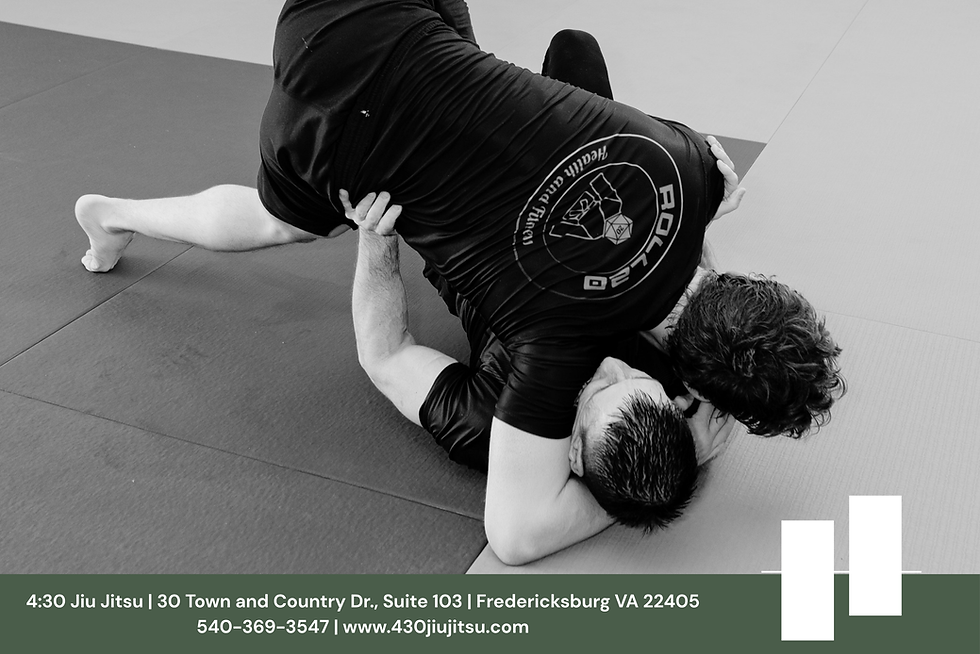
These reactions appear in jiu jitsu almost immediately. A new student may tense every muscle as soon as a training partner applies pressure. They may push in every direction, hold their breath, or try to escape before they understand what position they are actually in.
None of those reactions are unusual. The body is trying to solve discomfort as quickly as possible. The useful part is that jiu jitsu makes these habits visible.
It is one thing to believe that you remain calm under pressure. It is another to notice yourself rushing, forcing, hesitating, or becoming attached to one solution when a real problem is unfolding.
Training gives students the opportunity to recognize those reactions and practice something different.
Students gradually learn that solving the problem is not about moving more. It is about noticing more.
A Jiu Jitsu Round Is a Series of Decisions
From the outside, jiu jitsu can look like a contest of strength or technique. From the inside, it is a continuous decision-making process.
Imagine that a student is trying to escape from underneath a training partner. They feel pressure and immediately begin pushing. The push does not create space. Their arms become extended, their breathing becomes shallow, and the position gets worse.
At that moment, several decisions are available.
They can continue pushing harder.
They can pause long enough to protect themselves and understand the position.
They can change the angle of their body.
They can address the source of the pressure rather than fighting the entire weight of the other person.
They can abandon the original escape and use a different opportunity that has appeared.
The physical movement matters, but the decision behind it matters just as much.
Students gradually learn that solving the problem is not about moving more. It is about noticing more.
Where is the pressure actually coming from?
What is preventing movement?
Which part of the position is dangerous, and which part is merely uncomfortable? What option is available now, not five seconds ago?
Those questions are not very different from the ones people face during a workplace problem, an important conversation, or a leadership decision.
You Rarely Get Perfect Information Before You Have to Act
One of the most valuable lessons in jiu jitsu is that certainty usually arrives too late. You cannot always see every grip. You cannot know exactly how your training partner will respond. You may recognize several possible outcomes, but none of them is guaranteed. Waiting until you know everything often means waiting until the opportunity has disappeared.
That does not mean students should move recklessly. Good decision-making under pressure is not random action disguised as confidence. It requires using the information that is available, identifying the most immediate concern, and choosing a reasonable response.
This is also how many real-world decisions have to be made.
A business owner cannot guarantee that a new hire will succeed. A manager may need to address a problem before every detail is confirmed. A professional may have to recommend a direction while circumstances are still changing.
The goal is not to predict the future perfectly. The goal is to make the best decision supported by the current information and remain prepared to revise it when something changes. Jiu jitsu teaches students to become comfortable with that process. They stop waiting for the entire answer and begin looking for the next useful piece of information.
In leadership and Jiu Jitsu, decisions often have to be made before every answer is available.
What Feels Urgent Is Not Always What Matters Most
Pressure creates a powerful sense that everything needs to happen immediately.
In jiu jitsu, that feeling can cause a student to attempt a dramatic escape when a smaller defensive adjustment would solve the most important problem. They may use all their energy trying to get out of a position that is uncomfortable but not yet dangerous.
Experienced students begin to establish an order of operations:
Protect what is vulnerable.
Address the most immediate threat.
Look for the next opportunity.
Improve the position.
That sequence sounds simple, but following it under pressure requires discipline.
Workplaces create similar confusion. Notifications, deadlines, requests, mistakes, and opinions can all arrive at once. The loudest issue begins to feel like the most important one, even when it carries little consequence.
Strong decision-makers learn to separate emotional urgency from actual priority. Not every message deserves an immediate answer. Not every problem needs escalation. Not every uncomfortable situation requires a dramatic response. Sometimes the best decision is to stabilize the situation before trying to solve everything at once.
The Difference Between Acting and Reacting
A fast response is not automatically a good response. Reaction is often driven by discomfort. Decision-making includes some degree of observation and choice, even when that choice must be made quickly.
Jiu jitsu helps students develop a small but important space between feeling pressure and responding to it.
At first, that space may barely exist. A training partner moves, and the student immediately pushes back. They feel trapped and begin trying every escape they remember. One failed attempt leads directly into another. With experience, the pace begins to change.
The student feels pressure and notices where it is coming from.
They recognize that one part of the position needs immediate attention while another can wait.
They choose an action and remain aware of the response it creates.
That pause is not hesitation. It is processing.
Away from training, the same ability can prevent a tense email from becoming a damaging exchange. It can help a leader hear criticism without immediately defending every decision. It can allow someone to remain involved in a difficult conversation instead of reacting to the discomfort of the moment.
Jiu jitsu does not teach people to become emotionless. It teaches them that an emotional reaction does not have to make the next decision for them.
A Failed Decision Is Not the End of the Exchange
Many people struggle to make decisions under pressure because they believe the decision must be correct the first time. That expectation creates its own kind of paralysis. When every choice feels permanent, hesitation begins to feel safer. People analyze longer, seek more opinions, and avoid committing to a direction. Once they finally choose, they may defend that decision long after the evidence suggests it is not working.
Jiu jitsu makes that approach nearly impossible.
A student chooses an escape. Their training partner blocks it. Now there is new information. The student may discover that their timing was late, their angle was wrong, or the opening they expected was never truly available. They may also notice that the failed attempt caused their training partner to shift, creating a completely different opportunity. The original decision did not work, but it still contributed useful information.
This changes the meaning of failure. A poor result does not always mean the student lacked ability. It may mean the situation required a different answer. The important question becomes less personal and more practical:
What did that attempt reveal?
That perspective is valuable in any environment where experimentation, leadership, or problem-solving is required. Strong leaders are not people who avoid every incorrect choice. They are people who notice when a decision is not producing the intended result and adjust before pride creates a larger problem.
The Plan Is a Starting Point, Not a Promise
Students often begin an exchange with an idea of what they want to accomplish. They may want to control a particular position, reach a certain angle, or attempt a specific technique. Having a plan is useful because it gives their decisions direction.
Then the other person moves.
The original opening disappears.
A different problem develops.
The training partner responds in a way the student did not expect.
At that point, the plan has to change.
The student who remains attached to the original idea may continue forcing a technique that is no longer available. The student who understands the purpose behind the technique can release it and continue toward the larger objective another way.
This is adaptability, not indecision. The same distinction matters in professional environments. Plans are created using assumptions about timelines, budgets, team capacity, customer behavior, and outside circumstances. Some of those assumptions will inevitably prove incomplete.
A rigid leader interprets every change as a threat to the plan. An adaptable leader protects the objective while reconsidering the route.
Jiu jitsu reinforces this lesson repeatedly: commitment to the outcome does not require attachment to a single method.
Persistence Does Not Mean Doing the Same Thing Harder
“Keep going” is common advice, but it leaves out an important question:
Keep doing what?
More effort can be useful when the approach is sound and the situation requires patience. More effort can also make an ineffective strategy fail faster.
Jiu jitsu teaches students to remain committed to solving the problem without becoming loyal to one solution. A student may continue working toward an escape while changing the direction of their movement. They may stop fighting one point of control and address another. They may recognize that the current position cannot be preserved and move early rather than waiting until every option is gone.
The persistence lies in staying engaged with the problem.
The flexibility lies in changing how the problem is approached.
This is a valuable leadership skill because professional setbacks are not always evidence that the goal is wrong. Sometimes the process needs more time. Sometimes the approach needs to change. Sometimes the original goal no longer makes sense. Good decision-making requires being able to tell the difference.
Ecological jiu jitsu training places a strong emphasis on live interaction, changing conditions, timing, resistance, and problem-solving.
Emotional Regulation Is Part of the Decision
People often speak about decision-making as though it happens entirely in the mind. In reality, physical and emotional reactions influence nearly every choice made under pressure.
Frustration can make a person rush.
Embarrassment can make them defensive.
Exhaustion can reduce their awareness.
Fear can cause them to treat every possibility as an immediate threat.
Jiu jitsu brings those reactions into the open. A student who becomes frustrated may use more strength than necessary. Someone who feels embarrassed after making a mistake may stop experimenting and return to only the few movements that feel safe. A tired student may know what to do but struggle to recognize the opportunity quickly enough.
Learning to manage these reactions does not mean eliminating them. The student may still feel anxious, tired, or frustrated. The improvement is that those feelings no longer control the entire exchange. That is a practical form of confidence. Confidence under pressure is not the belief that every decision will work. It is the trust that you can remain present, make a choice, observe the result, and continue from there.
Leadership Under Pressure Is Not About Looking Certain
People often expect leaders to appear decisive at all times. That expectation can create leaders who speak with certainty before they understand the problem, defend decisions to protect their authority, or refuse to change direction because they fear appearing weak.
Jiu jitsu provides very direct feedback about the limits of that approach. Experience does not make someone correct in every situation. Strength does not make every strategy effective. Confidence cannot make an unavailable technique work. The position responds to what is actually happening, not what someone believes should be happening.
Leadership works the same way.
Authority does not make a decision accurate.
Experience does not remove the need to keep observing.
Confidence is useful, but only when it remains connected to reality.
The strongest leaders are often the ones who can say:
We made the best decision we could with the information available.
The situation has changed.
Here is what we are doing next.
That is not a loss of authority. It is responsible decision-making.
What Professionals Can Take From Jiu Jitsu
For professionals, the value of jiu jitsu is not that an office should be treated like a competition. It is that training provides direct experience with many of the same conditions that make workplace decisions difficult.
Competing priorities
A student cannot address every problem simultaneously. They must determine what matters most and work from there. Professionals face the same challenge when multiple requests, deadlines, and responsibilities compete for attention.
Difficult conversations
Pressure can make people defensive before they have fully understood what is being communicated. Jiu jitsu helps students notice the difference between discomfort and danger, which can support more measured responses in challenging conversations.
Changing plans
A strategy can be reasonable when it is created and ineffective once conditions change. Training normalizes adjustment instead of treating it as evidence that the original effort was wasted.
Incomplete information
Decisions often have to be made before every answer is available. Jiu jitsu teaches students to work with the information they have while remaining attentive to what emerges next.
Accountability
The result of a decision is immediate. Students cannot blame the original explanation, their intentions, or the plan they hoped would work. They have to observe the outcome and continue solving the problem. These lessons apply to business owners, managers, healthcare professionals, military personnel, first responders, educators, and anyone whose work regularly requires judgment under pressure.
How Ecological Jiu Jitsu Training Builds Decision-Making Skills
Ecological jiu jitsu training places a strong emphasis on live interaction, changing conditions, timing, resistance, and problem-solving. Students are not only shown movements to memorize. They are given opportunities to recognize when those movements are available and how they need to change based on the response of a training partner. That distinction matters.
A technique may look completely understandable during an explanation and become much harder to use once another person begins moving. The student must identify the relevant information, make an attempt, and adapt to the feedback they receive. This helps develop more than technical knowledge. Students begin to understand why a movement works, what conditions make it useful, and when another option would be more appropriate. In other words, they learn how to make decisions instead of simply reproducing answers.
Why the Training Environment Matters
Pressure can be useful for learning, but only when it exists inside a responsible training environment. Students do not need to be overwhelmed to improve. They need enough resistance to create a real problem, enough support to remain engaged, and enough control to learn without unnecessary risk.
At 4:30 Jiu Jitsu in Fredericksburg, Virginia, the goal is to create a challenging but controlled room where students can test decisions, ask questions, and develop at an appropriate pace. Smaller class sizes support that process. The coach can pay attention to how individual students are responding, help modify the level of resistance, and address questions before confusion becomes frustration. Training partners can create realistic problems without treating every exchange as a competition that must be won.
That environment gives students room to make mistakes productively.
One of the most valuable lessons in jiu jitsu is that certainty usually arrives too late.
Beginners Are Not Expected to Be Good at Pressure
Some adults hesitate to try jiu jitsu because they do not see themselves as naturally decisive, athletic, aggressive, or comfortable under pressure. Those qualities are not admission requirements.
A beginner is expected to feel uncertain. They are expected to encounter positions they do not understand and make choices that do not work. They are expected to need time. That is the learning process.
Students don't begin jiu jitsu because they already know how to remain calm, identify the right problem, and respond effectively. They begin because training gives them repeated opportunities to develop those skills.
The goal of an early class is not to produce perfect decisions. It is to help the student recognize a little more, react a little less, and make one useful choice at a time.
Decision-Making Under Pressure Is Built Through Practice
Books, seminars, and conversations about leadership can provide valuable ideas. They can help people understand stress, communication, and decision-making in theory. Jiu jitsu makes those ideas physical.
A student feels the urge to rush and practices slowing down. They become attached to one solution and discover the value of letting it go. They make a mistake, receive immediate feedback, and continue instead of treating the mistake as the end of the process. They experience pressure without allowing pressure to decide everything that happens next.
These lessons do not remain neatly confined to the training room. Someone who becomes better at pausing before reacting may communicate differently at work. A student who learns to adjust without embarrassment may approach professional setbacks with more flexibility. Someone who repeatedly solves unfamiliar problems may begin to trust themselves in other uncertain situations.
Jiu jitsu does not guarantee perfect decisions but rather it teaches people how to remain involved when the decision is difficult.
Jiu Jitsu, Leadership, and Decision-Making Under Pressure: Frequently Asked Questions
How does jiu jitsu improve decision-making under pressure?
Jiu jitsu improves decision-making under pressure by placing students in changing situations where they must identify problems, choose a response, and adjust while another person provides resistance. Students learn to act without complete information, distinguish urgency from importance, and remain engaged when the first decision does not work.
Can jiu jitsu help develop leadership skills?
Yes. Jiu jitsu can support leadership skills such as adaptability, emotional regulation, accountability, problem-solving, and decision-making under stress. Training teaches students that strong leadership is not about appearing certain at all times. It includes observing carefully, responding to feedback, and changing direction when circumstances require it.
Why is jiu jitsu beneficial for professionals?
Jiu jitsu is beneficial for professionals because it provides direct practice with incomplete information, competing priorities, changing conditions, and immediate feedback. These are common challenges in leadership, business, healthcare, public service, education, and other demanding professional environments.
Does jiu jitsu help with overthinking?
Jiu jitsu can help students become more comfortable making reasonable decisions before every possible outcome is known. Training requires action, but it also teaches students to distinguish useful action from panicked reaction. Over time, students may become better at identifying the information that matters most and choosing the next appropriate response.
Can jiu jitsu help someone remain calm under stress?
Jiu jitsu can help students practice remaining present while experiencing physical and mental pressure. The goal is not to remove every stress response. It is to recognize those reactions, manage them more effectively, and remain capable of making decisions while discomfort is present.
What does jiu jitsu teach about failure?
Jiu jitsu teaches that an unsuccessful attempt can provide useful information. A failed technique may reveal a problem with timing, positioning, or the original decision. Students learn to use that feedback, adjust their approach, and continue instead of treating one mistake as proof that they are incapable.
Is decision-making in jiu jitsu based on instinct?
Some responses become faster and more intuitive with experience, but those instincts are developed through repeated practice. Students learn to recognize common patterns, understand relevant information, and choose appropriate responses. Effective instinct is usually trained pattern recognition, not guessing.
What is ecological training in jiu jitsu?
Ecological jiu jitsu training emphasizes learning through live movement, resistance, timing, interaction, and problem-solving. Students work toward objectives while responding to a training partner rather than relying only on memorized movement sequences. This helps them understand when, why, and under what conditions a technique may work.
Do beginners need to be confident before starting jiu jitsu?
No. Beginners do not need to be naturally confident, aggressive, athletic, or comfortable under pressure. Confidence often develops through the training process as students encounter unfamiliar situations, make decisions, receive feedback, and see themselves improve.
Can jiu jitsu help with workplace decision-making?
The skills practiced in jiu jitsu can support workplace decision-making by helping students become more comfortable with uncertainty, competing priorities, changing plans, emotional pressure, and imperfect outcomes. The situations are different, but the underlying process of observing, deciding, and adapting is similar.
Where can adults learn no-gi jiu jitsu in Fredericksburg, Virginia?
4:30 Jiu Jitsu offers adult no-gi jiu jitsu classes in Fredericksburg, Virginia. Classes emphasize ecological training, live problem-solving, smaller class sizes, and personalized coaching for both beginners and experienced students.
Do I need previous martial arts experience to attend 4:30 Jiu Jitsu?
No previous martial arts or jiu jitsu experience is required. Beginners are welcome, and students can develop their understanding, physical skills, and decision-making ability gradually within a controlled training environment.
Learn to Make the Next Useful Decision
Pressure will not always arrive when you feel prepared. It appears during difficult conversations, changing plans, professional setbacks, leadership challenges, and moments when no option feels completely certain.
Jiu jitsu cannot remove those moments. It can give you a place to practice meeting them differently.
You learn to recognize what matters, act without having every answer, and adjust without treating a changed decision as a personal failure. You begin to understand that confidence under pressure is not certainty about what will happen next. It is trust in your ability to remain present and keep solving the problem.
At 4:30 Jiu Jitsu in Fredericksburg, VA, the focus is not just on movement, but on how decisions are made under pressure. Training is structured to remove distractions and reduce unnecessary noise so attention stays on what is actually happening in the moment.
Classes are designed with intention, emphasizing focused instruction, active coaching, and measured progress. The environment reinforces awareness, patience, and clarity, where development comes through consistent, deliberate practice rather than repetition without purpose. That approach extends beyond the mat, shaping how challenges are approached both in training and in everyday life.


Comments